Tuesday, October 9, 2018

A "Wish" a Day . . .

I am so excited about this book for many reasons.  I picked this book up at the school bookfair after parent-teacher conferences with my girls.  

I was told by my middle daughter, Audrey, (the one who reads the same graphic novels OVER and OVER again) that she was reading "too fast"  and often "rushing" through her reading, which in turn, is affecting her comprehension.  I knew it was time to stop having her read independently before bed and pick up a new and exciting book to read together.  

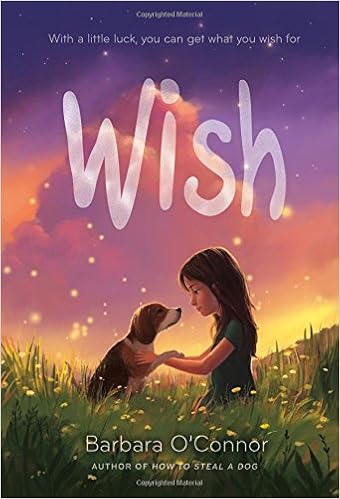
Wish by Barbara O’Connor is about a ten-year-old girl, Charlemagne (Charlie) Reese, who has been sent to the hillbilly town of Colby, North Carolina, to live with an aunt and uncle she hardly knows.   Charlie makes at least one wish a day. She wishes on stars and falling acorns and certain types of birds. She cuts off the tip of a piece of pie to eat last, believing it is good luck, the list goes on.  

What I LOVE most about this book (outside of Charlie's spunky, hot-tempered personality) is how the book shares viewpoints.  We call this critical literacy.  As a parent and teacher, we can use the book to discuss the stereotypes we are exposed to in the book and look at our personal biases and viewpoints compared to the character's and the author's intent.  Sounds deep, but hear me out.  

For example, Charlie is befriended by Howard who she calls the "up-down" boy because he walks with a limp.  Howard is a kind-hearted boy who has 7 brothers and lives in the smallest house Charlie has ever seen. His front yard is littered with rubbish and on Charlie's first visit inside his home, she finds the house, despite the piles of junk and dirt everywhere, filled with loveLove from the mother who hangs up all the kids' proud school papers on the wall--love when the mother kisses each boys' head while serving dinner--and love through the minute-by-minute laughter and smiles shared.  

Charlie isn't familiar with this love as her mother has severe depression.  Her mother is bedridden and didn't care if Charlie went to school or stayed on the couch all day watching TV.  Charlie's father, Scrappy, is in jail.  Although I haven't yet read about Charlie's daily wish, I'm guessing it is to bring her torn apart family back together.  

So far we are looking and generational poverty, depression, bullies, incarcerated parents, and disabilities through the eyes of a child.    What a fantastic book to read critically with children and building deep discussion!  

I encourage you to add this book to your "Want to Read" list! 

Tuesday, September 18, 2018

Toxic Mud

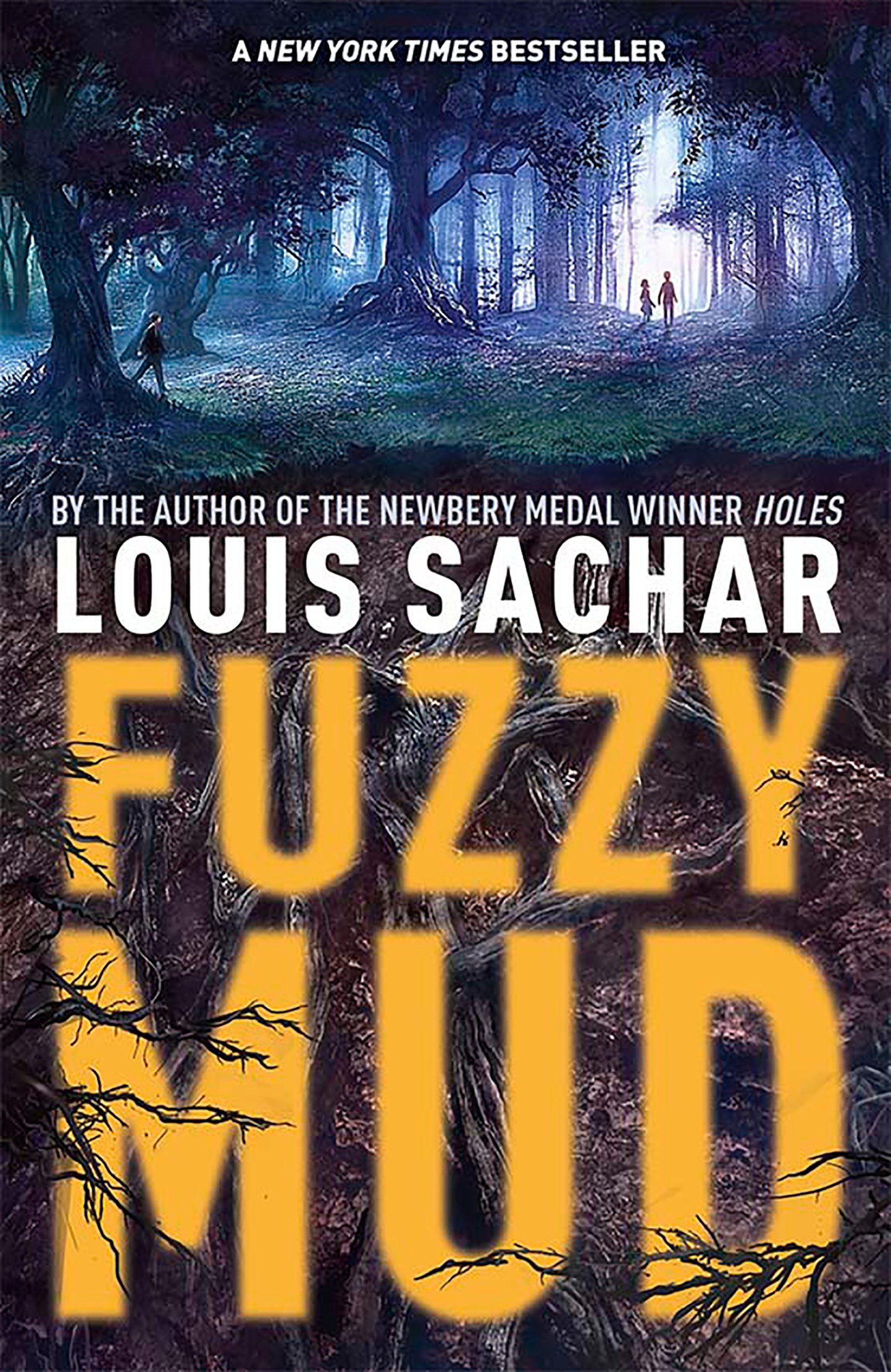
I've made great progress this week on my book challenge.  My daughter has been reading Fuzzy Mud by the award-winning author Louis Sachar (most well known for writing Holes).  She keeps telling me it's the BEST BOOK EVER, so I picked it up yesterday and read about 75% of the book.  She's just ecstatic that I am discussing the plot along with her. "What part are you at?"  "What predictions do you have?"  "Oh, you are going to LOVE the next part!"

The power of sharing a book with a child is such a wonderful gift (and I'm thankful we are now into reading books with more complex themes). Move over Junie B.!

Yes, this book is about Fuzzy Mud, and by that I mean, mud that is fuzzy-- and toxic.  Two kids taking a shortcut home from school (Tamaya and Marshall) in an attempt to avoid getting beat up by the bully (Chad) and in the process, get exposed to fuzzy mud.  

They got lost.
The world got scared.
And the mud got fuzzy.


The second storyline in the book is what appears to be the court case on a toxin that was exposed into the air and polluted the forest. This toxin has contaminated the three kids.  The toxin has the reader (a.k.a. me!) worried about the lives of the children.  

What I'm loving the most about this book is the characters and relationship building that is unveiled from this unfortunate, suspenseful experience.  We learn about the bully and his homelife (don't all bullies "bully" because they have low self-esteem?).  We learn about one misunderstanding which leads to a downward spiral, which has affected the victim (Marshall)--in this case- for years--causing him to hate school every.single.day.

Did I mention yet that I don't want my daughter to leave the safety of her elementary building for the vast and scary world of middle school with hormonal adolescents?!?!? Ha!  Really, I'm only half kidding.  

What I predict from the remaining chapters of this book is the answer to the scientific mishap and the outcome this mishap has given for the children and the community.  

My daughter asked me tonight what genre I would classify this book.  At first, I hesitated to say realistic fiction due to the toxic spores causing the community to get infected, but then I replied, "gosh, this really could be realistic fiction."  I'm unfortunately thinking it's likely more of a reality than a fantasy in our global, often toxic, world.  

What do you think?  

Until next week!

Tuesday, September 11, 2018

A Long Walk to Water

 
I am nearly finished reading A Long Walk to Water and expect to have it completed this week.  I keep thinking about the terror this 11-year old boy who has been separated from his family must feel.  I connect to my 10-year-old daughter and can't even imagine.  

One way this author provides context to Salva’s (the 11-year old boy) thinking is by placing his thoughts in italics. 

Where are we going?
Where is my family?
When will I see them again?


For Salva, it’s one problem after another.  He befriends another young refugee, Marial, and begins to value a new friendship.  However, this friendship ends tragically. 

As I was reading this section out loud to my daughter, I immediately turned on my teacher hat thinking…. Oh this would be a great passage to teach inference!  Yes, I can’t get away from that inner teacher voice that always appreciates a good opportunity for learning!

But as good readers, we have to read between the lines when the author frontloads this event by writing about the proximity of lions on their journey, “Every day they saw lions, usually resting in the shade of small trees.”

Then, after needing to rest and falling asleep two steps off the path, Salva is woken up suddenly by his Uncle.  Salva hears wailing & crying and the uncle’s face was very solemn. 

“I’m so sorry Salva,” Uncle said quietly, “Your friend….”

“A cold fist seemed to grip Salva’s heart”

The author again places Salva's thoughts in italics, He (Marial) should be somewhere nearby…I don’t remember if he slept near me—I was so tired—perhaps he has gone to find something to eat-

As readers, we piece together the puzzle—we know the tragic narrative without needing to hear the words. 

This is sad.  But, it opens the door to examine this author's craft and use of inference.  How to make an inference and model our writing in the way this author unfolds the narrative of this story. 

As I near the end of this book, I’m looking forward to uncovering the connection between the two narratives of the story, which in Nya’s four-hour journey to water in 2008 (2x a day) and Salva’s journey as a lost boy of Sudan seeking safety in 1985.  As this is based on a true story, I’m also looking forward to hearing more about the background of this novel.

Happy to begin this semester’s book challenge with all of you! 

Tuesday, April 24, 2018

Historical Fiction with a Fantasy Twist, Yes Please!

This week has flown by!  I see from your blog posts that several of you have tried the Magic Tree House book series.  My daughter and I are reading a Magic Tree House book as well!  This series mixes in elements of both historical fiction and fantasy.  We have a large set of them and I think she is now confident reading them independently so I’m hoping she starts to really enjoy this series (because she can learn SO much from the historical fiction part of this book).
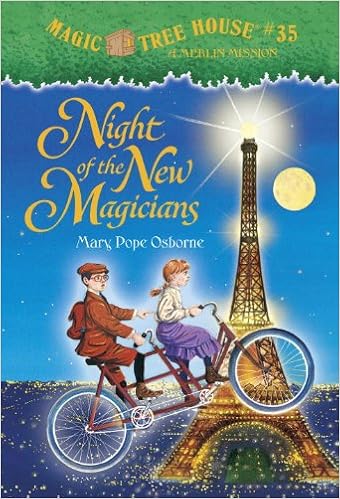
My daughter is obsessed with all things Paris, so we opted for Night of the New Magicians, which is set in Paris. We are only in the beginning stages of the book currently, but Jack and Annie have landed in Paris during the 1889 World’s Fair. Did you know that the Eiffel Tower was built for this fair? Jack and Annie taught me that interesting fact! (see why I think these books are so educational?)
Their task is to find four “new magicians” and protect them from an evil sorcerer. Here are the four magicians”
  1. The Magician of Sound—his voice can be heard for a thousand miles.
  2. The Magician of Light—his fires glow, but they do not burn.
  3. The Magician of the Invisible—he battles deadly enemies no one can see.
  4. The Magician of Iron—he bends the metals of earth and triumphs over the wind.
 After reading these descriptions, my daughter and I took a few minutes to talk about which magician we would like to be if we could pick. We then decided that my her brother would be the Magician of Chaos—he destroys all things! I thought it might be kind of fun to expand this to a “who am I?” game in the classroom. Perhaps with famous people or vocabulary terms.
I’m guessing each magician is going to be an invention. I hope as I continue to read this I’ll pick up a few more interesting historical tidbits!
Dr. K.

Tuesday, April 10, 2018

Harris and Me


Ahhh-- So much to say about this novel.  I am rereading this for the first time since I was a 5th grade teacher.  If you have a reluctant middle-grade male reader-- this may be the novel that does turn that reluctant reader into an engaged reader!

The setting of this book takes place a few years after WWII.  The narrator of this story is an 11-year old boy (we never know his name), and Harris, a distant cousin who lives life like he has never witnessed.  This book is full of hilarious pranks as the boys both work hard on the homestead by tending to the various animals and certainly play hard too.

I was listening to the Ted Radio hour podcast recently where they referenced a TED talk by Alvin Irby.  In this podcast, he shares how to encourage our kids to become lifelong readers (yes, like Donlyn Miller).  Specifically, he is an advocate for encouraging black male youth to read.  He cites startling research- such as --85 percent of black male fourth graders are not proficient in reading.


He also shares: 

"Scholastic's 2016 Kids and Family Report found that the number one thing children look for when choosing a book is a book that will make them laugh. So if we're serious about helping black boys and other children to read when it's not required, we need to incorporate relevant male reading models into early literacy. In exchange, some of the children's books that adults love so much for funny, silly or even gross books, like "Gross Greg"." 

While Harris & Me isn't a novel with a black male protagonist, it certainly is humorous as they wrestle pigs, hunt for mice, and engage in combat with the crazy rooster, Currently, in the novel, the main character is starting to turn a corner and begin to match Harris's pranks.  I recently read the most HILARIOUS part of the story when the narrator engages in the ultimate payback-- convincing Harris to urinate on an electric fence!  Yes, I did say that right... I was even brave enough to read this book aloud to students-- we could barely get past the laughter to read it.  Yes, there is some profanity in this book, and yes, I substituted the profanity with appropriate words.  :)

One other note of interest is the author of this novel, Gary Paulson, who is best known for the Hatchet series among other adventure novels.  This novel is out of context for this author and written in a completely different genre--I'd be interested to hear more about his inspiration for this narrative. 

Every teacher should read this book-- I promise it will make you laugh and touch your heart.  

Until next week,
Dr. K.

e's  

Wednesday, March 28, 2018

Owl Diaries

I wanted to read this early chapter book and share with all of you this book, because it was the first “chapter book” that got my girls interested in reading those bigger adult-like books.  

As a teacher (and parent) it’s great to find books that will build a child’s reading confidence.  With the bright and colorful illustrations, speech bubbles, and large font, this book provided a great scaffold for my girls as they made this transition.  They read them over and over again. 

There are three books in this series.  I definitely recommend you add these books to your classroom library!

In this first book of the series, Eva the owl chronicles 11 days in her life.  Eva has received a new diary and uses it to record the details of her life, along with sunny drawings and photographs that make her diary more like a scrapbook.

I wanted to respond today to the creative wordplay in this book.  We have the teacher, “Mrs. Featherbottom” – who teaching “Winglish” and invented “owlspeak”—Exaggerated words include “flapperiific” and “flaptastic.”

How fun would it be to have students get creative with wordplay in their writing?  Graphic novels are all the rage—what if as a writing mentor lesson, we encouraged students to tackle a graphic novel with an animal as the main character?  Student then could make a list of pun words for their story which aligns with the animal or main character (like the owl examples above). Imagine the fun and creativity!  As a mini-lesson, I could see students working in groups to pick an animal and brainstorm words. 

This too reminds me of Roald Dahl books. Have you read any of his books?  Matilda, The BFG, and Charlie & the Chocolate Factory to name a few.  Dahl is known for his word play-embedding fun, nonsensical words into his stories  “Oompa-Loompas” and “whizzpopping” to “humplecrimp” and “zoonk?”  Yes, you can even find a curated list of his most scrumdiddlyumptious words here

My daughter has been on my case about reading my next book, Because of Mr. Terrupt.  She was so excited about the first, that we had to rush to Barnes and Noble to purchase the second book in the series!

Until then!
Dr. K.

Tuesday, February 27, 2018

Using Historical Fiction to Integration Literacy & Social Studies

In the novel, Number the Stars, Louis Lowry begins this novel with a bang by first describing Annemarie’s frightening encounter with German soldiers in the first chapter.  This historical fiction novel takes place during the Holocaust. 

Annemarie explains the world through the eyes of a 10-year old.  I believe this novel would be an excellent mentor text for teaching children how to explain a historical event through the eyes of a character (child, parent, teacher, neighbor, grandparent, etc.)  The author takes complicated historical events and simplifies events within the 10-year old perspective.  

For example, 

The Resistance fighters were Danish people—no one knew who, because they were very secret—who were determined to bring harm to the Nazis however they could. They damaged the German trucks and cars, and bombed their factories. They were very brave. Sometimes they were caught and killed. (1.55)  

She boils this down to just the essential—just the information a 10-year-old needs to know.  

So, by “reading like a writer,” I thought about how I would use this wonderfully written historical fiction novel as a mentor text for historical fiction.  In the elementary setting, Social Studies must be integrated into literacy.  So, as a writing extension, have student “show what they know” about XX [insert historical event such as the Boston Tea Party] by writing a narrative of the story told through the eyes of a character living at that time.  Wish I would’ve thought of this when I was a 5th-grade teacher!

This really is a great book.  It’s been sooo long since I’ve read it and I’m flying through it this second time around. 

Until next week,

Dr. K.