Wednesday, March 28, 2018

Owl Diaries

I wanted to read this early chapter book and share with all of you this book, because it was the first “chapter book” that got my girls interested in reading those bigger adult-like books.  

As a teacher (and parent) it’s great to find books that will build a child’s reading confidence.  With the bright and colorful illustrations, speech bubbles, and large font, this book provided a great scaffold for my girls as they made this transition.  They read them over and over again. 

There are three books in this series.  I definitely recommend you add these books to your classroom library!

In this first book of the series, Eva the owl chronicles 11 days in her life.  Eva has received a new diary and uses it to record the details of her life, along with sunny drawings and photographs that make her diary more like a scrapbook.

I wanted to respond today to the creative wordplay in this book.  We have the teacher, “Mrs. Featherbottom” – who teaching “Winglish” and invented “owlspeak”—Exaggerated words include “flapperiific” and “flaptastic.”

How fun would it be to have students get creative with wordplay in their writing?  Graphic novels are all the rage—what if as a writing mentor lesson, we encouraged students to tackle a graphic novel with an animal as the main character?  Student then could make a list of pun words for their story which aligns with the animal or main character (like the owl examples above). Imagine the fun and creativity!  As a mini-lesson, I could see students working in groups to pick an animal and brainstorm words. 

This too reminds me of Roald Dahl books. Have you read any of his books?  Matilda, The BFG, and Charlie & the Chocolate Factory to name a few.  Dahl is known for his word play-embedding fun, nonsensical words into his stories  “Oompa-Loompas” and “whizzpopping” to “humplecrimp” and “zoonk?”  Yes, you can even find a curated list of his most scrumdiddlyumptious words here

My daughter has been on my case about reading my next book, Because of Mr. Terrupt.  She was so excited about the first, that we had to rush to Barnes and Noble to purchase the second book in the series!

Until then!
Dr. K.

Tuesday, February 27, 2018

Using Historical Fiction to Integration Literacy & Social Studies

In the novel, Number the Stars, Louis Lowry begins this novel with a bang by first describing Annemarie’s frightening encounter with German soldiers in the first chapter.  This historical fiction novel takes place during the Holocaust. 

Annemarie explains the world through the eyes of a 10-year old.  I believe this novel would be an excellent mentor text for teaching children how to explain a historical event through the eyes of a character (child, parent, teacher, neighbor, grandparent, etc.)  The author takes complicated historical events and simplifies events within the 10-year old perspective.  

For example, 

The Resistance fighters were Danish people—no one knew who, because they were very secret—who were determined to bring harm to the Nazis however they could. They damaged the German trucks and cars, and bombed their factories. They were very brave. Sometimes they were caught and killed. (1.55)  

She boils this down to just the essential—just the information a 10-year-old needs to know.  

So, by “reading like a writer,” I thought about how I would use this wonderfully written historical fiction novel as a mentor text for historical fiction.  In the elementary setting, Social Studies must be integrated into literacy.  So, as a writing extension, have student “show what they know” about XX [insert historical event such as the Boston Tea Party] by writing a narrative of the story told through the eyes of a character living at that time.  Wish I would’ve thought of this when I was a 5th-grade teacher!

This really is a great book.  It’s been sooo long since I’ve read it and I’m flying through it this second time around. 

Until next week,

Dr. K.

Tuesday, February 20, 2018

Out of Mind--Finished!

I finished this book!  It was a great read and I highly recommend this for everyone—especially those who are fans of Wonder.  I WISH I would've  had this book as a classroom teacher.  There was tension as Melody, the main character, falls victim to discrimination.  

They don’t invite her to breakfast before they leave for the championship tournament because it’s inconvenient.  The other students and parents weren’t being malicious, they didn’t want the burden.  Then, Melody is faced with a devastating situation (I won’t share it because I don’t want to give it away!) and the reader is sad.  The reader feels for Melody—we are empathetic!  And, isn’t that what we want from ourselves as teachers?  From our students?  We want them to feel empathy towards others and to create a culture of caring in our classrooms.

Then, after the dust of the above event settles, we are faced with yet ANOTHER turn of events…. Ahh!  Why?  We had the conflict and we are working towards the resolution of the story and BAM, the unexpected happens.   I am still trying to figure out why the author opted for this in this story’s plot.  As a reader (and as a mom), this plot twist was wrenching and by this point, I didn’t find it necessary (again, won’t give away this plot twist).   After finishing, I was left thinking that this is a great read – one I would definitely recommend to each of you… however, my vote would be to eliminate the second sad event in this story – it’s just too much pulling on my heartstrings! 

I can't wait to catch up with what you all are reading!  


Tuesday, February 6, 2018

Out of my Mind

My daughter just finished the book she shared with all of you, Out of my Mind by Sharon Draper.  She's passed it on to me because "It's sooooo good!" and I'm about 1/2 way through the novel.  

I did a quick search on the novel as was pleased to see this book is a National Best-Seller.  I also found out Draper is a two-time Correta Scott King award recipient, which recognizes outstanding African American authors and illustrators who write for a youth audience.  Pretty cool!  

I found this book a nice compliment to Wonder, and believe both of these books will forever change how we all look at anyone with a disability.  

The main character, Melany has cerebral palsy. But she also has a photographic memory; she can remember every detail of everything she has ever experienced. She’s the smartest kid in her whole school, but NO ONE knows it. Most people—her teachers, her doctors, her classmates—dismiss her as mentally challenged because she can’t tell them otherwise. 

I'm finding myself torn between the shock of her mistreatment and the shock of facing any personal biases I might have unconsciously shared towards other with disabilities.  Our brains make incredibly quick judgments and assessments of people and situations without us realizing it.  This is something we all must continually work on.  

This title is so appropriate as the main character is going out of her mind trying to let others know she is more than her disability.  But, the author wrote this story in such a way that we are not to feel sorry for Melany-- Melany does not feel sorry for herself.  She sees beauty in this world.  

I can't help but feel great proudness of my daughter, Alice, while reading this book.  She is the most giving and loving child I know.  She works with a boy who has cerebral palsy at school, giving up her recess 2x/week to spend time him, and it is the highlight of her day.  She is not afraid to stand up for others and she's the first to befriend someone who is outcasted.  I am thankful for books like Out of my Mind and Wonder that raise awareness and generate critical discussions at home and school to promote social justice.  

This book provides a way for us to give ourselves a reality check.  When we see someone with a disability--let's not look away.  Let's not pretend we don't see or don't know what to say. Instead, let's just smile and say hello! 


Tuesday, January 30, 2018

When I'm Gone

Happy 1st post of the new semester!  This is always an exciting moment for me as I am now able to peek into your minds and check out all the great books you are reading.  My daughter Alice is still up reading Out of my Mind because she says it's just too good to put down.  This will definitely be on my reading list soon and I will fill you in on the book's details.  I do secretly enjoy when she stays up past bedtime because she can't stop reading.  That's the literacy professor in me for sure!

I'm in a few books right now with my kids; however, this week I decided to pick up a book of poems I hadn't read in a looooooong time.  Shel Silverstein.  I read from his books as a 5th-grade teacher, I've read a few poems with my kids, but not page-by-page to really take in each poem in this collection.

I wanted to respond to one poem in particular.  It's a short one so I'll type it out:

When I'm gone

When I'm gone, what will you do?
Who will write and draw for you?
Someone smarter--someone new?
Someone better--maybe you!  

I actually can't recall ever reading this poem, although it's likely I have.  It. hit. me.  As a mom and a daughter.  Our kids grow up.  We do everything for them, then, as they get older, they get more independent.  Our goal as parents is to raise kind, well-functioning citizens of this crazy world.  We do these things and teach our lessons to transfer as much knowledge and inspiration as we can to our children.  Although some readers may see this perspective as the author afraid the person might make the wrong decision so he/she should just take the lead him/herself.  I see this as encouragement from a parent to a child or a teacher to a student.  You become better, smarter, stronger, and more independent with time.  I see this as a reminder to live life when I'm no longer in the picture or living in this world.  

This poem is reflective in a positive light.  It's a good reminder.  You got this kid and I will encourage and support you along the way.  

What is your interpretation of this perspective?  

I think I may make a better attempt and the poetry genre this semester.  Hope you all had a fabulous week stealing many moments to read!  


Tuesday, November 21, 2017

To Survive


Happy to share that I finished the first book in the Hunger Games!  Listened to it all weekend while I was cleaning out and organizing closets-- made the time go by much more quickly!
I will admit that I greatly enjoyed this book.  I wanted to write today a bit about survival, which I feel is one of the many prominent themes of this book.  How does one survive while keeping dignity and sense of self?  During the hunger games, Katniss had to fight off fire, poisonous insects, hunger, thirst, and of course her peers or tributes.  To survive, she had to outsmart and even kill her opponents.

I connect this book's theme of survival to political survival between the Capital and its districts, social survival between the rich and poor, and survival of life.  For Katniss, she is the definition of a survivor, and her surviving these games came as no surprise.

Katniss outsmarted the capital, and my prediction for book two is that she will suffer for it.  Peeta and Katniss have survived together, yet they are still under the capital's control.  I believe book two will become another story of survival.  How will Peeta and Katniss's lives be changed after surviving these games?  How will she handle returning to District 12? How will she handle her relationship with Peeta?  After she confesses to playing into the "star-crossed lovers" image to help win the game, Peeta is heartbroken.  They arrive back home and put on a show for the crowd one last time:

"One more time? For the audience?" he says. His voice isn't angry. It's hollow, which is worse. Already the boy with the bread is slipping away from me. I take his hand, holding on tightly, preparing for the cameras, and dreading the moment when I will finally have to let go.” 

Collins shares his voice was "hollow" and this is worse than "angry." Wow, that's powerful craft.  We all know that hollow voice and look of goodbye.  Katniss is no doubt confused but now seems to be entering back into her district solo.  Can she now survive without Peeta?  What happens after she "let's go?"  Definitely planning to get my hands on book two in this series!


Wednesday, November 15, 2017

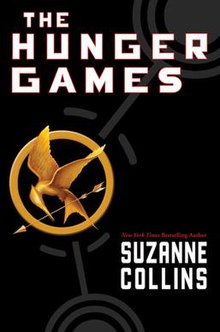
The Hunger Games

I went into the book with little background knowledge (other than Brad's posts, which is why I picked up this book!), and once I moved past the initial shock of what "The Hunger Games" involved, I was hooked.  I'm about half-way through the book and anticipate I will move through the second half quickly. 

In this text, we have totalitarian Capital government and teenagers, or "tributes", from various districts.  In the games, teens are forced to kill each other, even the teen from his/her own district, in a controlled Big Brother type environment.  Yes, the games are broadcasted on live television and the teens are essentially sacrificing their lives for the entertainment of their capital.  Sounds crazy?  It is, but I'm engrossed.  I see the Hunger Games arena similar to the Coliseum during Roman times.  How are the tributes different than gladiators fighting to their death for the citizens of the Empire's entertainment? 

Katniss, the main character, is a strong survivor.  Having lived in poverty, she hunted and gathered to feed her younger sister and mother.  At the beginning of the story, I felt as if I was reading a book about the past, back in the "olden" days when people hunted and bartered for food.  I later found out that this is rather a district inequity.  The Capital is modern, filled with the latest and greatest, and this book takes place in the future.  One quote that made me think and rethink our values is the following:

"They do surgery in the Capitol, to make people appear younger and thinner. In District 12, looking old is something of an achievement since so many people die early. You see an elderly person, you want to congratulate them on their longevity, ask the secret of survival. A plump person is envied because they aren't scraping by like the majority of us. But [in the Capitol] it is different. Wrinkles aren't desirable. A round belly isn't a sign of success." (Ch9)

It's all about perspective, right?


Anyway, when Katniss volunteers to take her sister's place at the reaping, the reader begins to develop her identity.  Yet, as the plot progresses, it's as if she is working to find her identity too.  I'm unsure if how she is being portrayed by the media is changing her identity.  And then there's Peter, the other tribute from district 12.  He is the biggest mystery to me in this story.  As the games have begun, I can't help but wonder how these two "star-crossed lovers" will handle a face-off in the arena, and will that happen?  I expect a rebellion, perhaps if these two unite, or even an escape.  I don't predict a sole winner in these games -- something complicated instead (as I know there are two more books to continue this series!). 

Collins has a craft for well-planned plot twists.  Looking forward to figuring things out as this plot unfolds. 

Till next time,
Dr. K.